Single Use Plastic Bottles

Let’s stop trashing our beaches with single use plastic bottles.

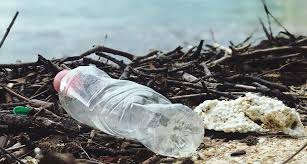
After years of hosting beach cleanups in the park, we’ve noticed a serious problem. One of the most common items of trash in the park and on the beach is empty plastic water bottles. The plastic is labeled as recyclable, which is good if it actually gets recycled. But littering the beach, or tossed in the woods, the plastic will not break down… true, it will eventually be crushed, flattened, and break into smaller and smaller pieces. The smallest bits will become so small they are referred to as micro-plastic. Guess what? Invisible micro-plastics are entering your drinking water because they are not removed by our public water utilities. Scientists have yet to determine the health consequences of consuming micro-plastics. Don’t forget the BPA chemicals in the plastic bottles…

So, why are we spotlighting plastic water bottles, when there is a lot of other trash on the beach/in the woods? Reducing or eliminating bottled water is one of the easiest ways to reduce a significant amount of trash each year in the environment. Consider using other water carriers: reusable stainless steel, aluminum, and thermos bottles. Plastic bottled water is necessary for communities lacking access to safe drinking water, but for many of us, it’s a convenience and could be used sparingly, when other methods cannot be adopted.

Plan ahead when you are spending time in Grant Park. If you bring water bottles in, then pack them out when you leave, because the park does not have a recycling program in place.

If you would like to dive deeper into plastic’s effect on the environment, our health, and social justice, author Daniel Jaffee, associate professor of Sociology at Portland State University has written a book: Unbottled: the fight against Plastic Water and Water Justice. You can hear Jaffee on Wisconsin Public Radio’s Central Time program… https://www.wpr.org/shows/central-time/american-girl-dolls-bottled-water.

Protections for Natural Areas: Milwaukee County Ordinance 47.08

The following is an excerpt from a blog post by Eddee Daniel entitled “Milwaukee County Strengthens Protections for Natural Areas” from the website awealthofnature.org, posted on July 29, 2022.

Here, in abbreviated form, are the new provisions:

(A) No person shall harvest, collect, deface, or disturb, in any manner, any portion of a native plant or native fungi within the Park System.

(B) Invasive species can be removed within the Park System only by Dept. of Parks, Recreation and Culture (DPRC) staff or those authorized through written permission from the DPRC. Planting of any vegetative material within the Park System without the written permission of the DPRC is prohibited.

(C) The harassment, capture, injury, or killing of native wildlife within the Park System is prohibited. Introduction or release of any animal, wild or domestic, within the Park System without the written permission of the DPRC is prohibited.

(D) Natural areas designated by the Southeastern WI Regional Planning Commission as “Natural Areas of Local, Regional, or State-wide Significance” or designated as “Critical Species Habitat Areas,” will receive a heightened level of protection. Only hiking, biking, running, bird watching and similar passive recreation activities are allowed and only on designated trails.

According to Natural Areas Supervisor Brian Russart “the County Board did want Parks to be lenient on individuals walking along designated trails in the park system eating the occasional handful of wild raspberries as they are walking, because the impact would be minor and the plants are typically found along trails.” This does not allow people to bring a basket along to pick and remove more berries from the park for later use.

Russart would like you to know this: “Citizens that observe illegal foraging in the park system are encouraged to call the Parks Ranger Hot-line (414-257-7777) as they are observing these activities. This way Parks can respond immediately, and appropriately address the situation.
Stairs Project Completed (2022)

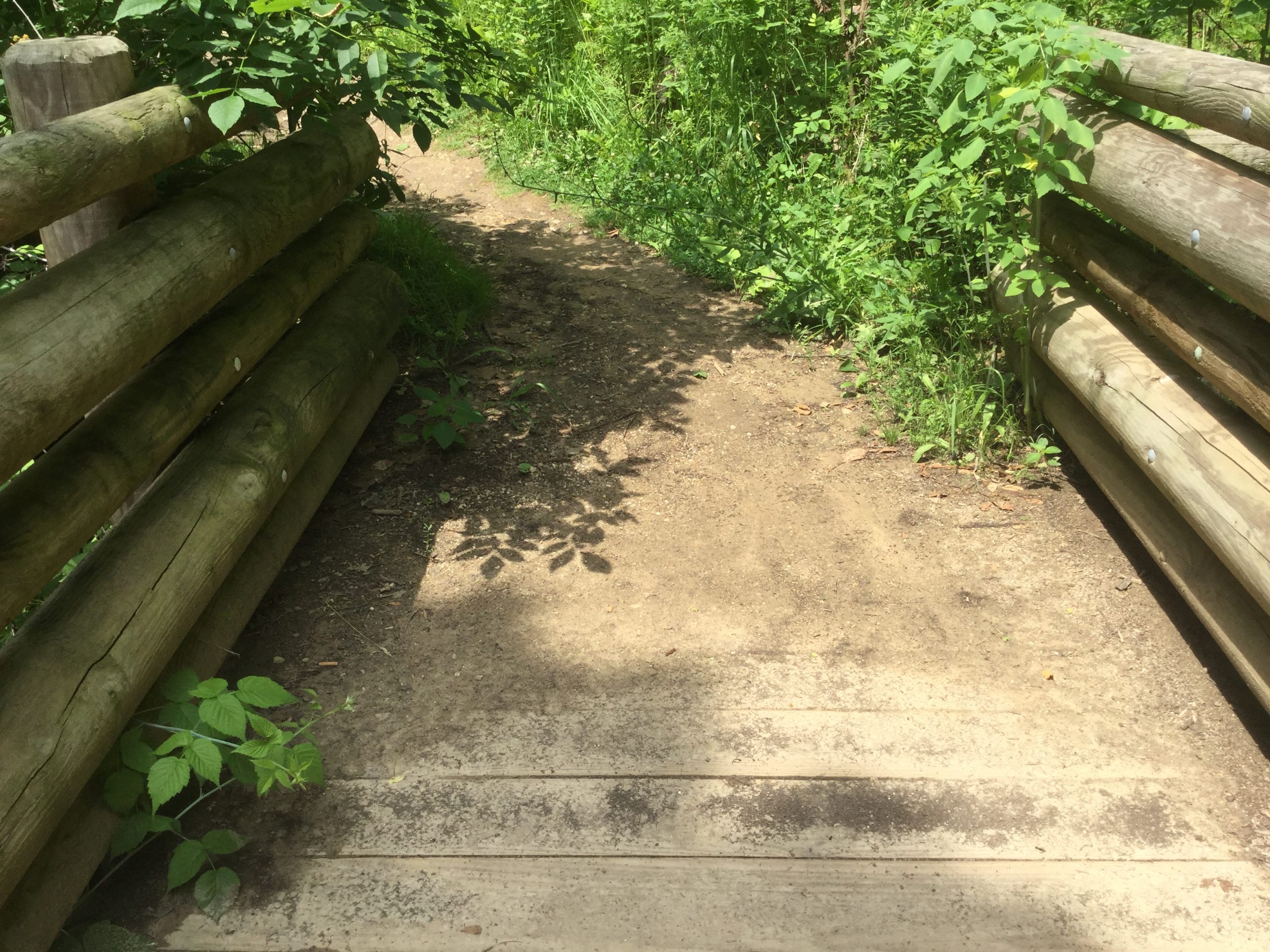
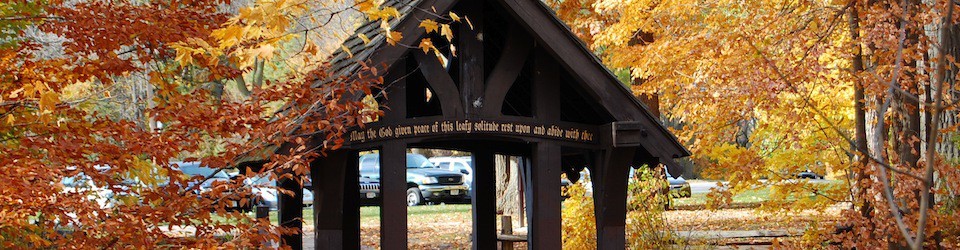
The Friends of Grant Park undertook planning and fundraising several years ago to improve egress in a ravine area near the Wil-o-way complex on the north end.  Following two consecutive 100+ year storms in 2010-11 that had destroyed most of the bridges in the park’s historic ravine trail system, a 2012 FEMA-funded footbridge was erected to restore the connection between the north and southern portions of the park all while protecting water quality.  Subsequent trail use commenced, with the result that an increasingly denuded trail on one side of the bridge eroded, causing potentially damaging siltation and mud distribution to the bridge deck and beyond to the creek below.  With preserving water quality, bridge infrastructure and safe egress as our goals, we proceeded with planning. 

Mud eroding onto the bridge deck.

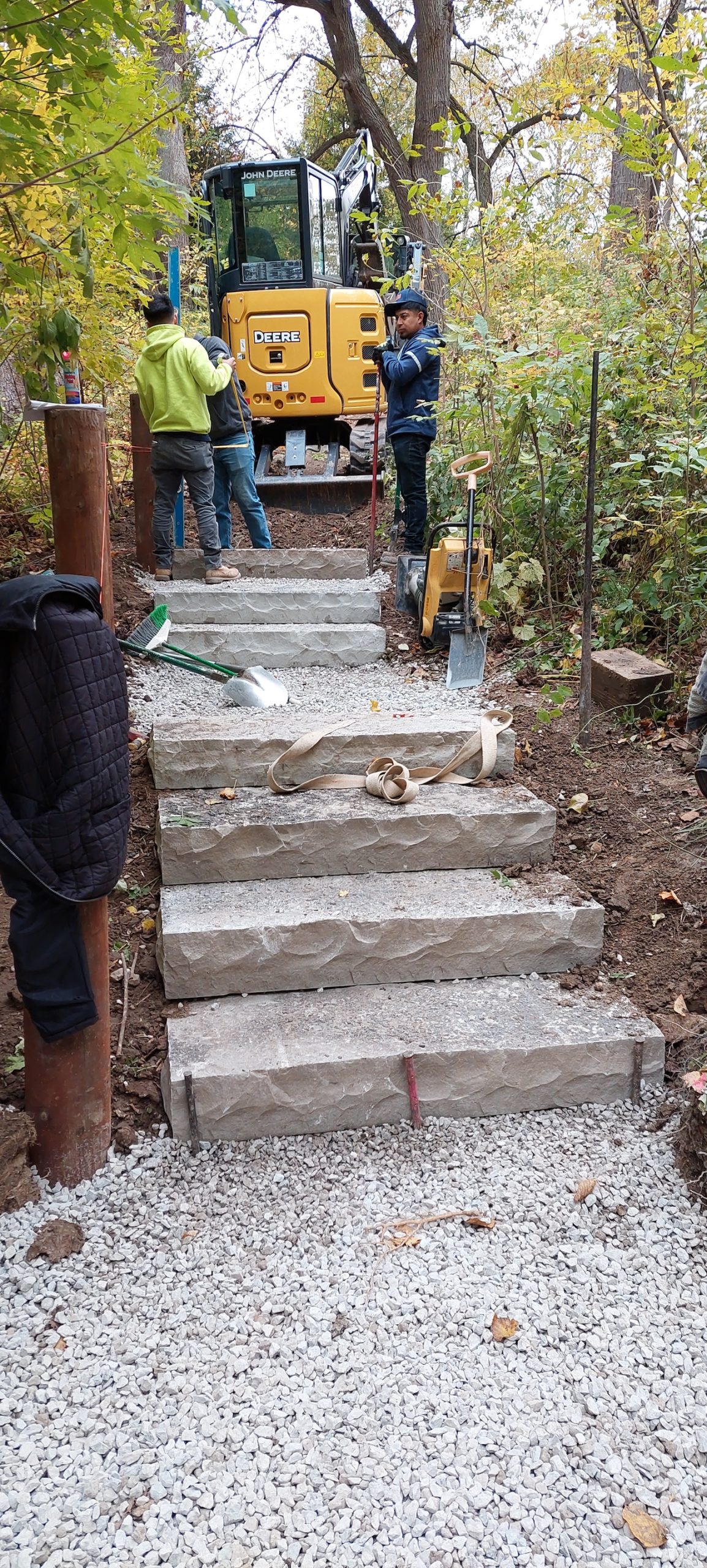
History:  Following a survey of the site by RA Smith Engineers, and combining design proposals and details by former Parks Landscape architect, Jim Ciha and local landscape designers, Betsy Abert and Patrick Devereux, we submitted architectural drawings for the proposed steps to Parks’ Planning Dept. during the height of COVID.  Parks had just undertaken a splendid larger restoration in the northern sector of the park with improved parking, paving, and water quality goals; thus, we were delayed in pursuing  our own project. Grants acquired from the Bucyrus Foundation, Eaton Corporation, and many many FoGP donors allowed this project to move forward with the requisite funds as required by Milwaukee County Parks.  Upon request, our park supervisor Sean Kelly delivered fencing material from the main yard to the job site. Cost increases, supply chain and transportation issues combined with employee shortage related to Covid certainly played a part in delays.  Contracting with an experienced nearby landscape firm, Stone Oak Landscapes, the steps and rail are now being installed with great precision.  We plan to restore/revegetate any areas disturbed during construction with native plant species. It is our hope that restoration efforts in the central/main ravine will be supported. With a start-up grant from Eaton Corporation, steps and walls there, installed in the 1930’s, need to be replaced and the slopes protected and revegetated. 

Many thanks to our own Betsy Abert for her expertise and perseverance in pursuing this goal. Photos courtesy of Betsy Abert.

Construction of stairs project in process. Oct. 2022
Completed stairs!
In our opinion, it was worth the wait…

No Foraging Allowed

A proposal to amend Milwaukee County Ordinance 47.08 to allow foraging of fruit, nuts and certain varieties of fungi was defeated by Milwaukee County supervisors after receiving strong opposition from FOGP and others. We opposed the ordinance due to the probability of increased foot traffic on sensitive off-trail areas of the park by those in search of certain plant materials. Other parks have reported extirpation of numerous species due to foraging practices. The ordinance would have applied to ALL county parks. Similarly sized metropolitan parks in other cities have all banned the practice.

Nature has provided a variety of plant materials to support the various animals and birds that inhabit the park as they seek food to sustain themselves. Similar sources of food are available for human consumption at farmer’s markets and grocery stores. When humans gather plant materials from the parks, they deprive the resident animals and birds thereby increasing the likelihood that their numbers will decline. Is that what we wish for?

South East Wisconsin Regional Planning Commission’s Master Plan for Oak Creek Watershed

After months of study, the South East Wisconsin Regional Planning Commission (SEWRPC) has posted Chapter 4 of the master plan for the Oak Creek watershed. Some surprising findings include PCB levels discovered at the sand bar mouth of Oak Creek at Grant Park beach that are twice as high as those at the MKE harbor. Also, high chlorides found in the watershed. You can read the report online at sewrpc.org.

The summary presentation for the 2nd half of Chapter 4 of the Oak Creek plan is now available on the project website (as of June 5).  It can be found at the link below – the presentation is located at the top of the links under the title Summary Presentation for the second half of Chapter 4.  

https://www.sewrpc.org/SEWRPC/Environment/Restoration-Plan-Oak-Creek-Watershed.htm

The Friends of Grant Park sent a letter of concern on January 24th, 2020, to the WI-DNR regarding the high PCB levels found at the mouth of Oak Creek in Grant Park. Four days later, the WI-DNR and the EPA announced the Great Lakes Legacy Act Agreement (signed on Jan. 6, 2020) to address a 32-year-old Area of Concern: the Milwaukee Harbor Estuary, which had PCB levels half as high as the Oak Creek samples taken by SEWRPC. We are still waiting for a reply.

Off-trail Foot Traffic Causes Slope Degradation: What Can We Do?

The Friends of Grant Park have identified the issue of off-trail foot traffic causing erosion as one of our top priorities to tackle in Grant Park.  We are in the process of installing new interpretive signs at the entrances to the Seven Bridges trail; they remind visitors to stay on the steps and established paths to prevent damage to the fragile sloped ecosystem in our ravines.  Some visitors choose to go “off trail”, hiking or biking, but doing so damages grasses, wildflowers and tree roots. Ultimately, slopes denuded of vegetation become rutted and eroded, as exposed soils wash down to the lower trails, then the creek, and finally Lake Michigan during rain events.  This siltation of our waterways is clearly evident over at the Mill Pond, for instance.  We can help reduce this effect by staying on the trails provided, using the stairs to access the beach, and treating the vegetated slopes with respect while visiting.

IMG_2726

Frequently our fundraising events highlight erosion-prevention projects such as that of 2012 where we installed compost, trees, shrubs and understory seedlings to a scoured part of our ravine slope following the washout of the main bridge to the beach in 2010’s storms.   We have “armored” volunteer trails with cut branches acquired during Buckthorn WeedOut events in the last two years, accomplishing a two-in-one task.  Matching grant moneys have made both of these projects feasible with the purchase of tools and materials needed to stabilize slopes.  As well, sometimes we need to hire professionals to undertake projects. 

IMG_2724

Friends of Grant Park encouraged the installation of fencing as a means of discouraging off-trail use.  It may be that this is a reasonable tactic in slopes now under siege.  And, we know that a set of stairs is necessary in proximity to one of the newer bridges.  We will take this into consideration with Parks planning.  Larger projects demand larger amounts of capital, a fact currently impossible with County budget deficits.  We encourage you to consider inquiring about long term support of our park, as well as more affordable, smaller donations. In this age of dwindling county budgets, we may lose the beauty of the ravine if we do not practice good stewardship now.

IMG_2728

Photos courtesy of Rebecca Wheeler

What about coyotes?

We have received reports over the past few years of coyotes seen and heard howling at night in the area. People are concerned about the safety of their pets while outdoors in their yards, or in the park.

The WI-DNR has information about coyotes on its website, https://dnr.wi.gov/files/PDF/pubs/wm/wm0567.pdf and another good article was printed in the Jan./Feb. 2019 issue of All Animals from the Humane Society, https://www.humanesociety.org/news/misunderstood-coyote.

Milwaukee County has a program to monitor coyote sightings. If you observe a coyote, log on to report your sighting. This data-base helps track of populations of coyotes and helps monitor their behaviors. This is the link for Coyote Watchhttps://www.inaturalist.org/projects/milwaukee-county-coyote-watch

The best advice is to keep your pets on a short leash at all times in the park, which is the park’s rule anyway. A coyote should be no more of a threat than someone else’s dog off leash attacking your dog off leash. And it bears repeating, only one (human) fatality has ever been recorded in the U.S.

Unknown